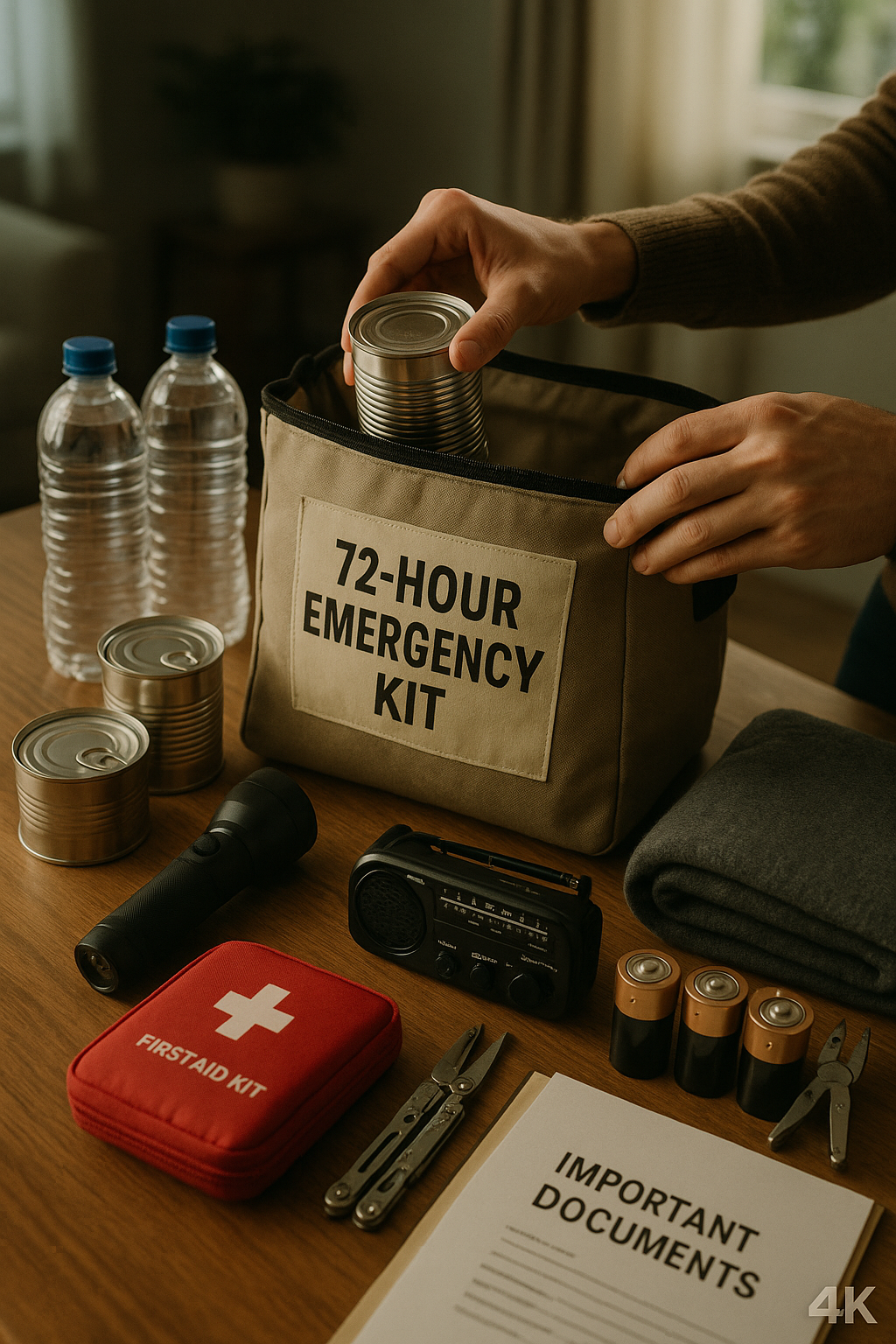
When disaster strikes, you have minutes — not hours — to grab what you need and go. Whether it's a wildfire, hurricane, or unexpected evacuation order, the difference between chaos and calm often comes down to one thing: preparation.
A 72-hour kit (also called a bug-out bag or go-bag) contains everything you need to survive for three days without outside help. Why 72 hours? That's typically how long it takes for emergency services to establish relief operations after a major disaster.
Here's how to build one that actually works.
The Foundation: Water and Food
Water is your most critical supply. The human body can survive weeks without food but only days without water.
- 1 gallon per person per day (3 gallons total per person)
- Store in sturdy, portable containers
- Include water purification tablets or a filter as backup
- Replace stored water every 6 months
In NomadCore: PackMind tracks your water supply with expiration dates and quantities. Set it once and get reminded when it's time to rotate — no more guessing when you last swapped out those jugs.
Food should be non-perishable, calorie-dense, and require no cooking.
- Canned goods (beans, tuna, vegetables)
- Energy bars and granola
- Dried fruit and nuts
- Peanut butter
- Crackers
Don't forget a manual can opener. It's a small item that becomes critical when you're staring at a can of beans with no way to open it.
First Aid: Beyond the Basics
A basic first aid kit is essential, but most pre-made kits are designed for minor cuts, not emergencies. Upgrade yours with:
Standard Items
- Adhesive bandages (various sizes)
- Sterile gauze pads and medical tape
- Antiseptic wipes
- Tweezers and scissors
- Pain relievers (ibuprofen, acetaminophen)
Emergency Additions
- Tourniquet (and know how to use it)
- Israeli bandage or pressure dressing
- QuikClot or hemostatic gauze
- SAM splint
- Burn gel packets
- Any prescription medications (rotate every 3 months)
A first aid kit is only as good as your knowledge. Take a basic first aid course — many are free through the Red Cross.
In NomadCore: Log every first aid item in PackMind with expiration dates. The app also includes offline first aid reference guides — step-by-step procedures you can pull up without cell service.
Light, Power, and Communication
When the grid goes down, you need alternatives.
Lighting
- LED flashlight (with extra batteries)
- Headlamp (keeps hands free)
- Emergency candles and waterproof matches
- Glow sticks (safe, no fire risk)
Power
- Hand-crank or solar radio (NOAA weather bands)
- Portable phone charger (keep it charged)
- Extra batteries in common sizes (AA, AAA)
Communication
- Fully charged cell phone
- Written list of emergency contacts
- Local area map (phones die, paper doesn't)
- Whistle for signaling
The hand-crank radio is non-negotiable. When cell towers are down and the internet is out, NOAA weather radio may be your only source of official information.
In NomadCore: Store priority emergency contacts for one-tap dialing, download offline maps of your area, and keep your family communication plan accessible without internet. Your phone becomes a self-contained emergency hub.
Shelter and Warmth
You can't always count on finding shelter. Pack items that let you create your own.
- Emergency Mylar blankets (compact, retain 90% of body heat)
- Wool blanket (warm even when wet)
- Tarp or emergency tent
- Paracord (50 feet minimum)
- Hand warmers
- Rain poncho
Clothing to Include
- Complete change of clothes
- Sturdy shoes or boots
- Hat and gloves
- Extra socks (feet are critical)
Hypothermia can occur in temperatures as high as 50 degrees F if you're wet and exposed. Don't underestimate shelter.
Documents and Cash
In an evacuation, you may need to prove who you are without access to the internet.
Keep Copies Of
- Driver's license or ID
- Passport
- Insurance policies (home, auto, health)
- Bank account information
- Medical records and prescriptions
- Emergency contact list
- Recent photos of family members
Store These
- In a waterproof bag or container
- As physical copies AND on a USB drive
- Consider a fireproof document bag
Cash: Keep $200-500 in small bills. ATMs don't work without power, and card readers fail during outages.
In NomadCore: Store digital copies of critical documents in your emergency plan. Every family member with the app gets access — even offline. No USB drive to lose, no paper to get wet.
Tools and Miscellaneous
The items that don't fit a category but prove invaluable:
- Multi-tool or knife
- Duct tape (wrap around a pencil to save space)
- Work gloves
- N95 masks (dust, smoke, debris)
- Garbage bags (waterproofing, waste, emergency poncho)
- Zip ties
- Notepad and pen
- Deck of cards (morale matters)
Sanitation
- Toilet paper
- Hand sanitizer
- Wet wipes
- Feminine hygiene products
- Plastic bags for waste
Special Considerations
For Families with Children
- Diapers and formula (if applicable)
- Comfort items (small toy, blanket)
- Children's medications
- Games or activities
- Copy of custody documents
For Pet Owners
- Pet food (3-day supply)
- Collapsible water bowl
- Leash and carrier
- Vaccination records
- Recent photo of pet
For Those with Medical Needs
- 7-day supply of medications (minimum)
- Medical equipment and batteries
- List of doctors and pharmacies
- Medical alert information
- Backup glasses or contacts
Choosing the Right Bag
Your container matters. A 72-hour kit needs to be:
- Portable: You should be able to carry it for extended periods
- Durable: It may get thrown in a truck bed or dropped
- Accessible: You need to find items quickly
A quality hiking backpack (40-60 liters) works well for most people. Avoid suitcases — wheels don't work on debris-covered roads.
Weight guideline: Your packed kit should be no more than 20% of your body weight if you expect to move quickly.
Storage and Maintenance
A kit you can't find or that's expired is useless.
Storage
- Keep it somewhere accessible (not the attic)
- Near an exit door or in your vehicle
- Tell family members where it is
Maintenance Schedule
- Monthly: Check flashlight batteries
- Quarterly: Rotate medications, check food dates
- Biannually: Replace water, update documents
- Annually: Full inventory and replacement of expired items
In NomadCore: PackMind automates your maintenance schedule. Track every item's expiration date, get notifications before things go bad, and do inventory checks right from your phone. No spreadsheet required.
The 72-Hour Kit Checklist
Water & Food
- Water (1 gallon/person/day)
- Water purification method
- 3-day food supply (non-perishable)
- Manual can opener
First Aid
- First aid kit (upgraded)
- Prescription medications
- First aid manual
Light & Power
- Flashlight + batteries
- Headlamp
- Hand-crank radio
- Phone charger
- Extra batteries
Shelter & Warmth
- Emergency blankets
- Tarp or tent
- Paracord
- Change of clothes
- Rain gear
Documents & Cash
- ID copies
- Insurance documents
- Cash ($200-500)
- USB backup
Tools
- Multi-tool
- Duct tape
- Work gloves
- N95 masks
Sanitation
- Toilet paper
- Hand sanitizer
- Wet wipes
- Garbage bags
Start Today, Not Tomorrow
The best time to build a 72-hour kit was yesterday. The second-best time is now.
You don't need to buy everything at once. Start with water and first aid. Add food next week. Build your kit over a month, and you'll have peace of mind that lasts for years.
Disasters don't announce themselves. But when the alert hits your phone at 3 AM, you'll be ready.
Track your emergency supplies, manage expiration dates, and build comprehensive emergency plans with NomadCore — the offline-first survival app that keeps you prepared when it matters most.