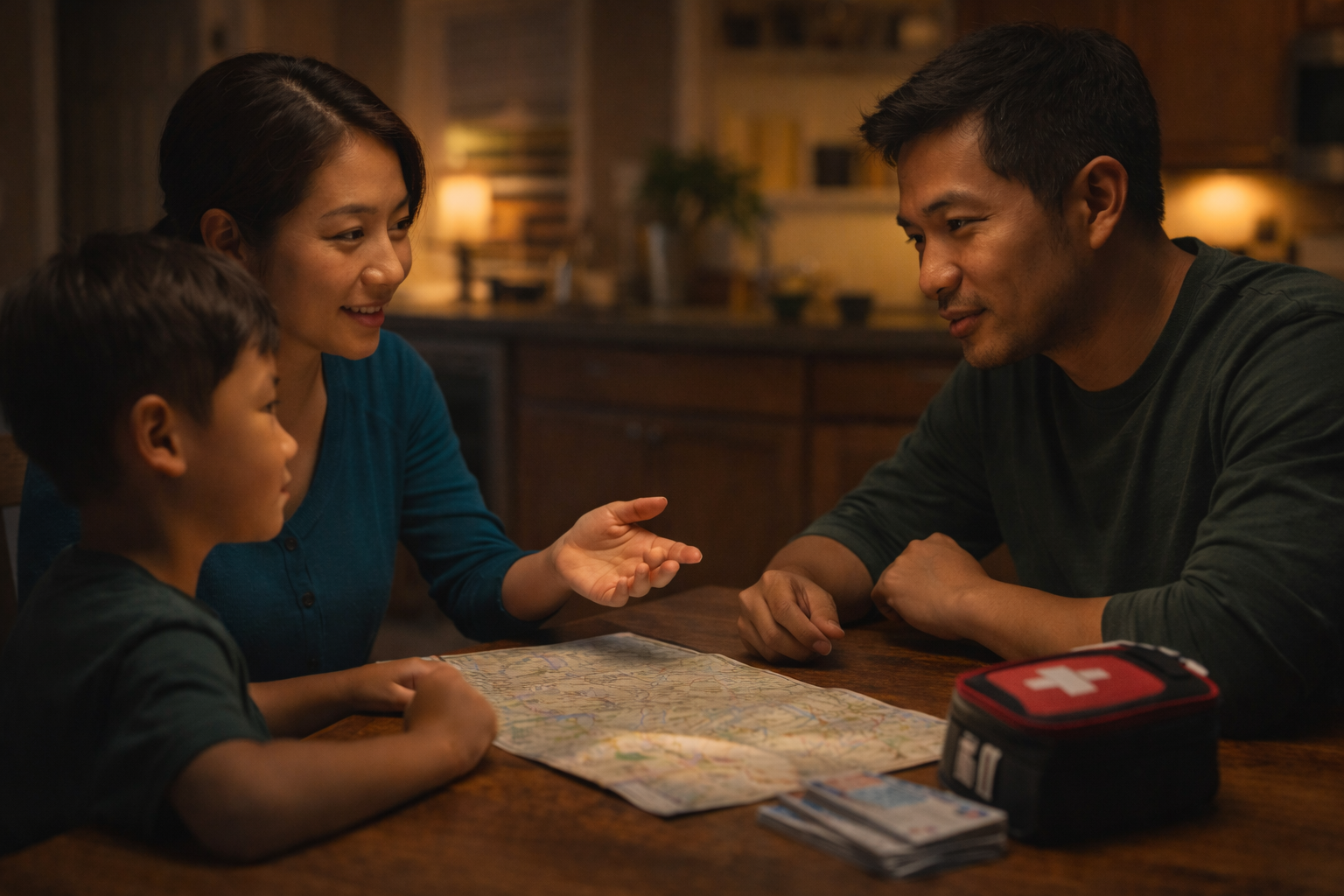
Here is something that surprises most parents: research from the American Academy of Pediatrics consistently shows that children who understand emergency plans are calmer, more cooperative, and more emotionally resilient when something actually goes wrong. The kids who struggle the most are not the ones who were told too much. They are the ones who were told nothing at all.
We avoid these conversations because we want to protect our kids from fear. But silence does not protect them. It leaves a vacuum, and children fill that vacuum with their imagination, which is almost always worse than reality.
The good news is that talking about preparedness does not have to be scary. Done right, it builds confidence. It gives kids a sense of control. And it turns "What if something bad happens?" into "We have a plan for that."
Here is how to have those conversations at every age.
Why Kids Need to Know
Child psychologists have understood this for decades: uncertainty creates more anxiety than knowledge. When children do not understand what is happening or what to do, their stress response goes into overdrive. They cling, they cry, they freeze. Not because the situation is dangerous, but because it is unknown.
Think about it from a child's perspective. They hear tornado sirens but no one explains what they mean. They see their parents watching the news with worried faces but no one tells them what is going on. They overhear a conversation about evacuation routes but nobody includes them.
Kids are always listening. They pick up on more than we think. And when they do not have the full picture, they fill in the gaps with the scariest version they can imagine.
Preparedness conversations solve this. They replace fear of the unknown with a simple, powerful message: "We have a plan, and you are part of it."
"Children do not need to be shielded from the concept of emergencies. They need to be equipped with age-appropriate understanding and a role in the family plan." -- American Psychological Association
Ages 2-5: Keep It Simple and Safe
Toddlers and preschoolers do not need to understand what a hurricane is. They need to know three things: grown-ups will keep them safe, there are helpers everywhere, and some things we practice just in case.
How to Talk About It
- Use stuffed animals and dolls. "Let's practice what Teddy does when the smoke alarm beeps. Teddy gets low and crawls to the door!"
- Focus on helpers. Firefighters, police officers, paramedics, teachers. "If something happens and Mommy isn't there, find a helper."
- Make it a game. Fire drills can be races. "Let's see how fast we can all get to the meeting tree!" Stopwatch optional but highly effective.
- Teach 911. Practice on an unplugged phone. "If Mommy or Daddy can't talk and you need help, press 9-1-1 and tell them your name."
Key phrases for this age:
- "We practice so we're ready."
- "Grown-ups and helpers will always take care of you."
- "Let's practice together so we all know what to do."
At this age, repetition matters more than depth. Short, calm, matter-of-fact. If you are not anxious, they will not be anxious.
Ages 6-9: Build Competence
School-age kids are natural learners. They want to feel capable. This is the age where preparedness stops being a game and starts becoming a skill set.
What They Can Learn
- Memorize key information. Home address, parent phone numbers, out-of-state contact number. Quiz them regularly. Make it part of car rides.
- Help build the go-bag. Let them pick their own flashlight. Let them choose which snacks go in. Ownership creates buy-in.
- Assign a role. "If we have to leave quickly, you're in charge of grabbing the pet carrier." A specific job reduces panic and gives them purpose.
- Practice meeting points. Walk to the near-home meeting point together. "If there's a fire and we get separated, this is where we meet. Can you find it from school?"
- Introduce weather safety. What does a tornado warning mean? What do we do during a thunderstorm? Keep it practical, not dramatic.
NomadCore tip: Build your family emergency plan in NomadCore and hand the phone to your kids. The plan is visual, clear, and designed to be understood at a glance. When kids can see the meeting points on a map and read their assigned role, the plan feels real to them -- not just something the adults talked about.
Ages 10-13: Real Responsibility
Preteens are more capable than most parents give them credit for. They can handle real information and real tasks. This is the age where you start building a teammate, not just a follower.
What They Can Handle
- Use emergency supplies. Show them how to use a fire extinguisher, where the first aid kit is, how to turn on the emergency radio.
- Basic first aid. Treating a cut, applying pressure to a wound, recognizing signs of shock. The Red Cross offers courses for this age group.
- Utility shutoffs. Where is the water main? Where is the gas valve? Where is the circuit breaker? Walk them through it once.
- Reading weather alerts. Teach them the difference between a watch and a warning. Show them how to check alerts on a phone or NOAA radio.
- Help plan family procedures. "What should our evacuation route be if the main road is flooded?" Let them problem-solve with you.
NomadCore tip: Use the assigned roles feature in your family plan to give your preteen specific responsibilities. When they can see "Turn off water main" or "Grab the first aid kit" listed next to their name, it is not just a conversation -- it is their job. That sense of ownership makes them more likely to remember and act.
Ages 14+: Near-Adult Partnership
Teenagers are nearly adults in capability, if not always in motivation. Treat them like partners in preparedness. The more seriously you take their role, the more seriously they will take it.
What They Should Know
- CPR and first aid certification. Many organizations offer teen courses. It is a life skill that extends well beyond family emergencies.
- Insurance basics. Where are the documents? What is the policy number? Who do you call to file a claim? They do not need to understand deductibles, but they should know the folder exists.
- Execute the plan independently. If parents are unreachable, can they get themselves and younger siblings to the meeting point? Do they know the out-of-state contact? Can they access the emergency plan?
- Mentor younger siblings. Have them teach the 6-year-old the meeting point. Teaching reinforces their own knowledge and builds family cohesion.
- Drive evacuation routes. If they are driving age, make sure they have practiced the evacuation route at least once.
This is also the age where you can be more direct about why preparedness matters. They can handle hearing about real events. Just keep it factual, not fear-based.
Age-Appropriate Tasks at a Glance
| Age Group | Conversations | Tasks They Can Own |
|---|---|---|
| 2-5 | Helpers are everywhere; we practice to stay safe; what to do when alarms sound | Participate in fire drills; recognize 911; know their full name |
| 6-9 | Why we prepare; what different warnings mean; meeting point locations | Memorize address and phone numbers; help build go-bag; grab assigned item during drills |
| 10-13 | How emergencies work; utility shutoffs; reading weather alerts; basic first aid | Use fire extinguisher; turn off water main; lead younger siblings to meeting point; operate emergency radio |
| 14+ | Insurance and documents; independent decision-making; real-world scenarios | CPR/first aid certified; execute full evacuation plan solo; drive evacuation route; mentor siblings |
The Family Drill
Conversations are important. Practice is what makes them stick. Quarterly drills do not need to feel like boot camp. They can be casual, even fun, and still be effective.
Fire Drill (5 minutes)
Sound the smoke alarm (or yell "Fire drill!"). Everyone practices getting out and meeting at the designated spot. Time it. Try to beat last quarter's time. Debrief: "What went well? What could be faster?"
Shelter-in-Place (5 minutes)
Pick a room. Practice getting everyone there with water, a flashlight, and the emergency radio. For tornado drills, practice getting to the interior room, lowest floor, away from windows. Make it quick and matter-of-fact.
Evacuation Rehearsal (20 minutes)
Once or twice a year, practice the full evacuation. Everyone grabs their assigned items. Load the car. Drive the evacuation route (or at least the first few miles). This reveals gaps you would never find on paper. "Wait, where is the pet carrier? Who has the documents bag?"
Communication Plan Test (5 minutes)
Quiz time. "What's the out-of-state contact's number? Where is meeting point B? What do you do first if the power goes out?" For younger kids, make it multiple choice. For older kids, make them explain the full sequence.
NomadCore tip: Set up recurring reminders in your phone for quarterly drills. After each drill, update your family plan in NomadCore with anything that changed -- a new meeting point, an updated phone number, a reassigned role. The plan stays current because the drills keep it honest.
What NOT to Say
How you talk about emergencies matters as much as what you say. A few things to avoid:
Do Not Use Graphic Details
A 7-year-old does not need to know that tornadoes can throw cars. They need to know: "We go to the bathroom, sit in the tub, and cover our heads with pillows." Stick to actions, not worst-case imagery.
Do Not Use Emergencies as Threats
"If you don't listen, you won't know what to do in a fire" turns preparedness into punishment. Keep it positive: "When we practice, we get better at keeping each other safe."
Do Not Dismiss Fears
"There's nothing to be scared of" does not help a child who is already scared. Instead: "It makes sense to feel a little worried. That's why we have a plan. Want to practice it together?"
Do Not Over-Expose to News Coverage
24-hour news cycles repeat the same footage endlessly. Young children do not understand that it is the same event on replay -- they think it is happening again and again. Limit exposure, especially for kids under 10. If they see something, talk about it calmly and briefly.
Signs a Child Is Anxious
Even with the best approach, some kids process emergency information with more anxiety than others. Watch for these signs:
- Regression. A previously potty-trained child having accidents. An older child suddenly wanting to sleep in your bed again. Thumb-sucking returning.
- Sleep disruption. Nightmares, difficulty falling asleep, not wanting to sleep alone, waking up frequently.
- Clinginess. Not wanting to go to school, not wanting parents to leave, following you from room to room.
- Physical complaints. Stomach aches and headaches with no medical cause, especially before school or bedtime.
- Behavioral changes. Increased irritability, withdrawal from friends, loss of interest in activities they used to enjoy.
What to do about it:
- Acknowledge their feelings without minimizing them. "I can see you're worried. That's okay."
- Return to routine. Predictability is the best antidote to anxiety.
- Reduce exposure to news and adult conversations about disasters.
- Revisit the plan together. Walking through the steps can restore their sense of control.
- If anxiety persists beyond a few weeks or interferes with daily life, talk to your pediatrician. There is no shame in getting professional support.
The 60-Second Version
If you remember nothing else from this article:
- Talk to your kids about emergencies. Silence creates more fear than conversation.
- Match the conversation to their age. Simple and safe for little ones. Real responsibility for older kids.
- Give every child a role. A specific job turns anxiety into action.
- Practice quarterly. Drills make the plan real. Keep them short and positive.
- Watch for anxiety. If a child is struggling, slow down, acknowledge their feelings, and revisit the plan together.
Prepared kids are not scared kids. They are confident kids. They are the ones who know what the alarm means, where to go, and what their job is. They are the ones who help their friends stay calm on the playground when the tornado siren goes off.
That confidence starts with one conversation. You can have it tonight.
NomadCore tip: Share your family emergency plan with your kids via QR code. Each family member gets the complete plan on their own device -- meeting points on a map, assigned roles, emergency contacts, and step-by-step procedures. When kids can pull up the plan themselves, it is truly theirs. And a plan they own is a plan they will follow.
Download NomadCore to build a family emergency plan that everyone in your family -- including your kids -- can access, understand, and use when it matters most.