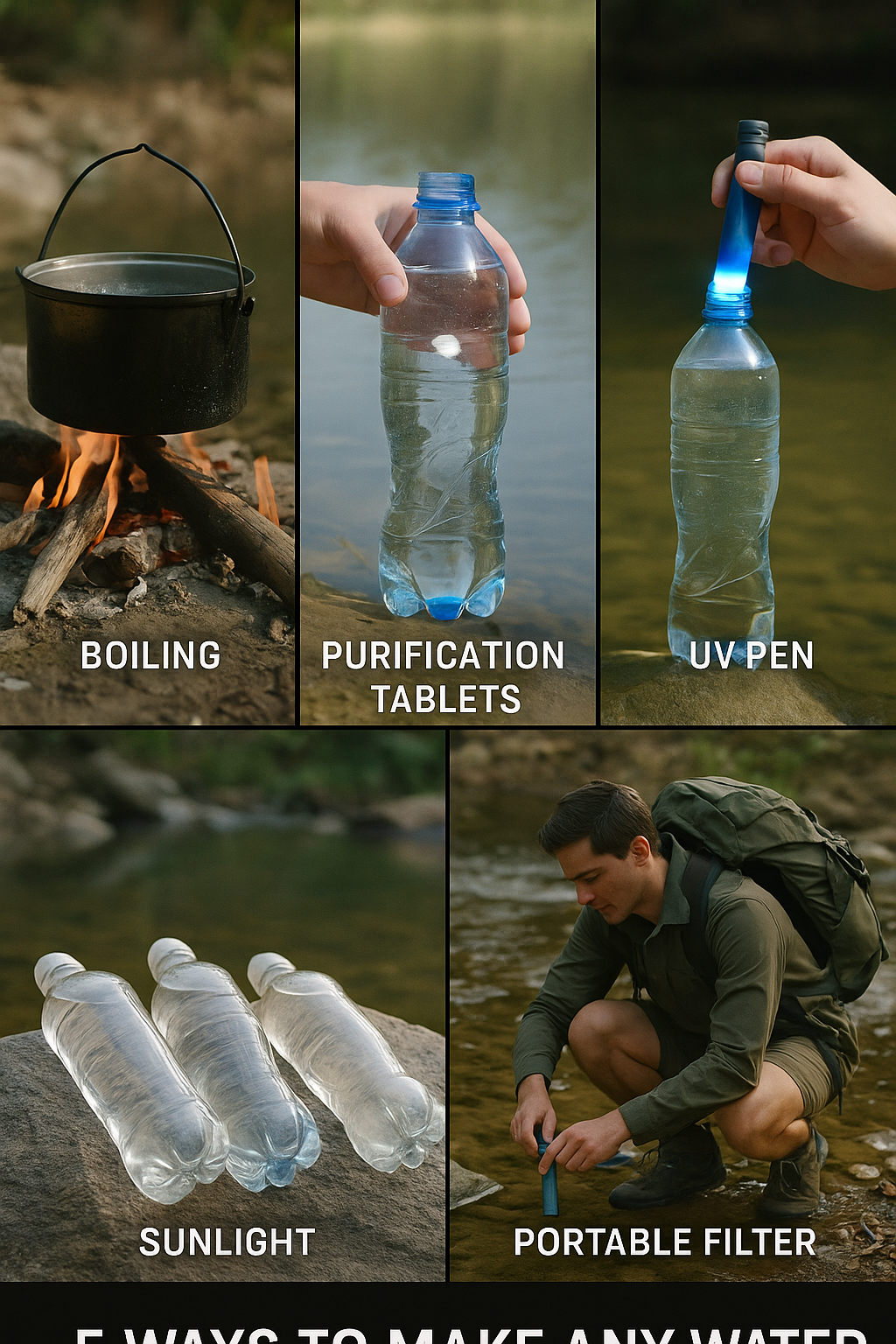
Water is life. In a survival situation, you can last weeks without food but only three days without water. The problem? Not all water is safe to drink.
Lakes, streams, and even rainwater can contain bacteria, viruses, parasites, and chemical contaminants that cause everything from mild stomach upset to life-threatening illness. Drinking contaminated water when you're already in a survival situation can turn a bad day into a fatal one.
The good news: purifying water isn't complicated. Here are five proven methods — each with different strengths, limitations, and ideal use cases.
Method 1: Boiling
The gold standard of water purification.
Boiling is the oldest, most reliable method of making water safe to drink. Heat kills bacteria, viruses, and parasites that cause waterborne illness.
How to Do It
- Collect water in a heat-safe container
- Bring to a rolling boil
- Maintain boil for 1 minute (or 3 minutes above 6,500 feet elevation)
- Let cool before drinking
Pros
- Kills virtually all pathogens
- No special equipment needed (just fire and a container)
- Works on any water source
- Free (if you have fuel)
Cons
- Requires fire or heat source
- Uses fuel (which may be limited)
- Takes time to boil AND cool
- Doesn't remove chemicals, heavy metals, or sediment
- Water tastes flat (no dissolved oxygen)
Best For
- Base camp situations where you have time and fuel
- When you're certain the water is only biologically contaminated
- Backup method when other options fail
Improve flat-tasting boiled water by pouring it back and forth between two containers to re-oxygenate it.
Method 2: Purification Tablets
Lightweight, portable, and effective.
Chemical purification tablets use iodine, chlorine, or chlorine dioxide to kill pathogens. They're a favorite among backpackers and emergency preppers for good reason.
How to Use Them
- Fill container with water
- Add tablet according to package directions (usually 1 tablet per liter)
- Wait the specified time (30 minutes to 4 hours depending on type)
- Drink
Types of Tablets
| Type | Wait Time | Taste | Effectiveness |
|---|---|---|---|
| Chlorine dioxide | 30 min - 4 hours | Minimal | Excellent (kills Cryptosporidium) |
| Iodine | 30 minutes | Noticeable | Good (doesn't kill Crypto) |
| Chlorine | 30 minutes | Slight | Good (doesn't kill Crypto) |
Pros
- Extremely lightweight and portable
- Long shelf life (5+ years unopened)
- Inexpensive
- No power or fuel needed
- Easy to use
Cons
- Wait time required
- Chemical taste (especially iodine)
- Some don't kill Cryptosporidium
- Less effective in cold or murky water
- Iodine not recommended for pregnant women or those with thyroid issues
Best For
- Bug-out bags and emergency kits
- Backpacking and hiking
- Backup to primary purification method
Chlorine dioxide tablets (like Aquamira or Katadyn Micropur) are worth the extra cost -- they kill everything including Crypto, with minimal taste.
In NomadCore: Track your purification tablet supply and expiration dates in PackMind. Tablets last 5+ years unopened, but you'll want to know exactly how many you have and when they expire — the app handles that automatically.
Method 3: UV Light (SteriPEN)
High-tech purification in your pocket.
UV purifiers use ultraviolet light to destroy the DNA of bacteria, viruses, and parasites, rendering them unable to reproduce and cause illness.
How to Use It
- Fill a clear container with water
- Insert UV device
- Stir for the specified time (usually 60-90 seconds per liter)
- Drink immediately
Pros
- Fast (under 2 minutes)
- No chemical taste
- Kills bacteria, viruses, and parasites
- Reusable (batteries or rechargeable)
- Lightweight
Cons
- Requires batteries or power
- Only works in clear water (sediment blocks UV)
- Doesn't remove particles or chemicals
- Electronic device can fail
- More expensive upfront
Best For
- Travel to developing countries
- Clear water sources
- When speed matters
- Tech-savvy users who maintain their gear
Always carry backup purification (tablets) in case your UV device fails or batteries die.
Method 4: Solar Disinfection (SODIS)
Free purification using only sunlight.
The SODIS method uses UV radiation from the sun to kill pathogens. It's been promoted by the World Health Organization for areas without access to clean water.
How to Do It
- Fill clear plastic bottles (PET plastic, 2 liters or smaller)
- If cloudy, filter through cloth first
- Lay bottles horizontally in direct sunlight
- Wait 6 hours in full sun (or 2 days if cloudy)
- Drink
Pros
- Completely free
- No equipment beyond plastic bottles
- No fuel or batteries needed
- Effective against bacteria and viruses
Cons
- Slow (6+ hours minimum)
- Requires direct sunlight
- Less effective against parasites like Crypto
- Doesn't work with glass or scratched bottles
- Limited volume (small bottles only)
Best For
- Long-term survival situations
- When no other options available
- Supplementing other methods
- Developing world applications
Paint one side of the bottle black or place bottles on a dark or reflective surface to increase UV absorption and effectiveness.
Method 5: Portable Filters
Physical removal of contaminants.
Portable filters force water through microscopic pores that physically trap bacteria, parasites, and sediment. Higher-end models include activated carbon for chemical removal.
Types of Filters
| Type | Flow Rate | Best For |
|---|---|---|
| Straw filters (LifeStraw) | Sip | Personal, emergency |
| Squeeze filters (Sawyer) | Moderate | Backpacking, small groups |
| Pump filters (MSR, Katadyn) | High | Groups, base camp |
| Gravity filters | Hands-free | Camp, groups |
Pros
- Immediate results (no waiting)
- Removes sediment and particles
- No batteries or fuel
- Good filters remove bacteria and parasites
- Some include carbon for taste/chemicals
Cons
- Most filters DON'T remove viruses
- Filters can clog (need maintenance)
- Heavier than tablets
- Can freeze and crack in winter
- Eventually need replacement
Best For
- Backpacking and camping
- Areas with bacteria/parasite risk (not virus)
- Murky water (filters clean it)
- When you need water NOW
In areas where viruses are a concern (human waste contamination), use a filter for clarity THEN treat with tablets or UV.
In NomadCore: Access offline water purification guides with step-by-step instructions for each method. When you're in the field and can't remember wait times or dosages, the reference is right on your phone — no signal needed.
Quick Comparison Chart
| Method | Bacteria | Viruses | Parasites | Chemicals | Speed | Weight | Cost |
|---|---|---|---|---|---|---|---|
| Boiling | Yes | Yes | Yes | No | Slow | N/A | Free |
| Tablets | Yes | Yes | Yes* | No | Medium | Light | $ |
| UV Light | Yes | Yes | Yes | No | Fast | Light | $$$ |
| SODIS | Yes | Yes | Partial | No | Very Slow | None | Free |
| Filter | Yes | No** | Yes | Some | Fast | Medium | $$ |
*Chlorine dioxide tablets only. **Purifier filters (like MSR Guardian) do remove viruses.
What Should You Carry?
For most emergency preparedness, we recommend a two-method approach:
Primary: Portable Filter
- Immediate water access
- Clears sediment
- Reusable
Backup: Purification Tablets
- Lightweight redundancy
- Handles viruses
- Works if filter fails
This combination covers nearly every scenario while keeping weight manageable.
In NomadCore: Log your water filter, tablets, and stored water in PackMind with replacement dates. Track filter usage so you know when it's time for a new one, and get notified before your tablets expire.
The Cardinal Rule
When in doubt, purify.
Clear, flowing mountain stream? Purify it. Rainwater from a clean container? Purify it. Water from a public tap in a disaster? Purify it.
Waterborne illness can incapacitate you within hours. The few minutes spent purifying water is always worth it.
Water Sources to Avoid
Even purification has limits. Avoid these when possible:
- Water with chemical contamination (industrial runoff, agricultural areas)
- Water near animal carcasses
- Stagnant water with algae blooms
- Flood water (contains sewage, chemicals, debris)
- Salt water (purification doesn't remove salt)
If these are your only options, purify AND filter through cloth, and understand the risks.
Build Your Water Strategy
Your 72-hour kit should include:
- 3 gallons stored water per person
- Portable filter (like Sawyer Squeeze)
- Purification tablets (chlorine dioxide)
- Metal container for boiling (backup method)
With these four elements, you're prepared for any water situation short of apocalyptic chemical contamination.
In NomadCore: Your water strategy is part of your emergency plan. Track stored gallons per person, log purification supplies in your inventory, and access offline guides for each purification method — all in one app that works without internet.
Manage your emergency water supplies, track filter replacement dates, and access offline survival guides with NomadCore — the app that keeps you prepared when it matters most.